Algo casi inconcebible
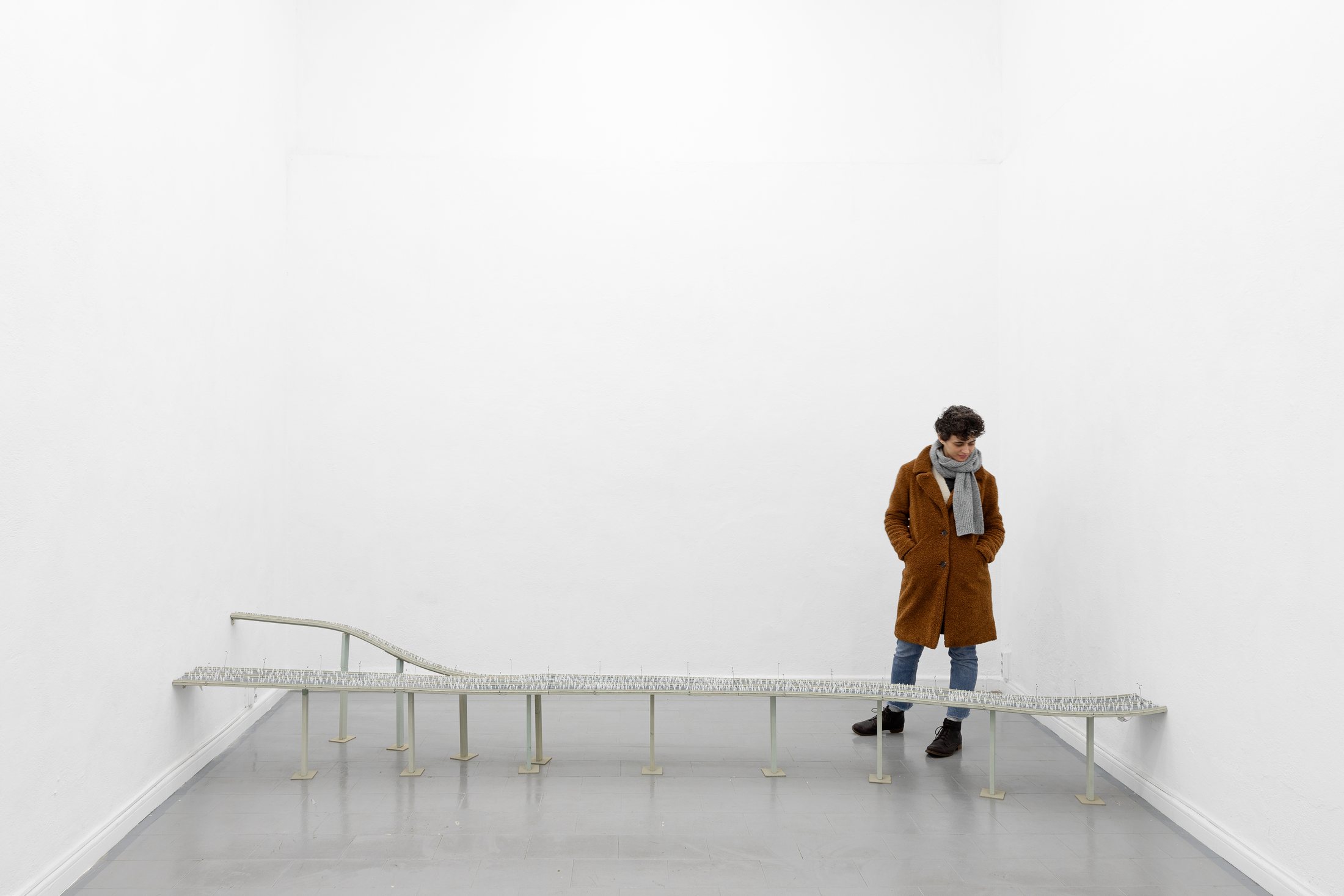
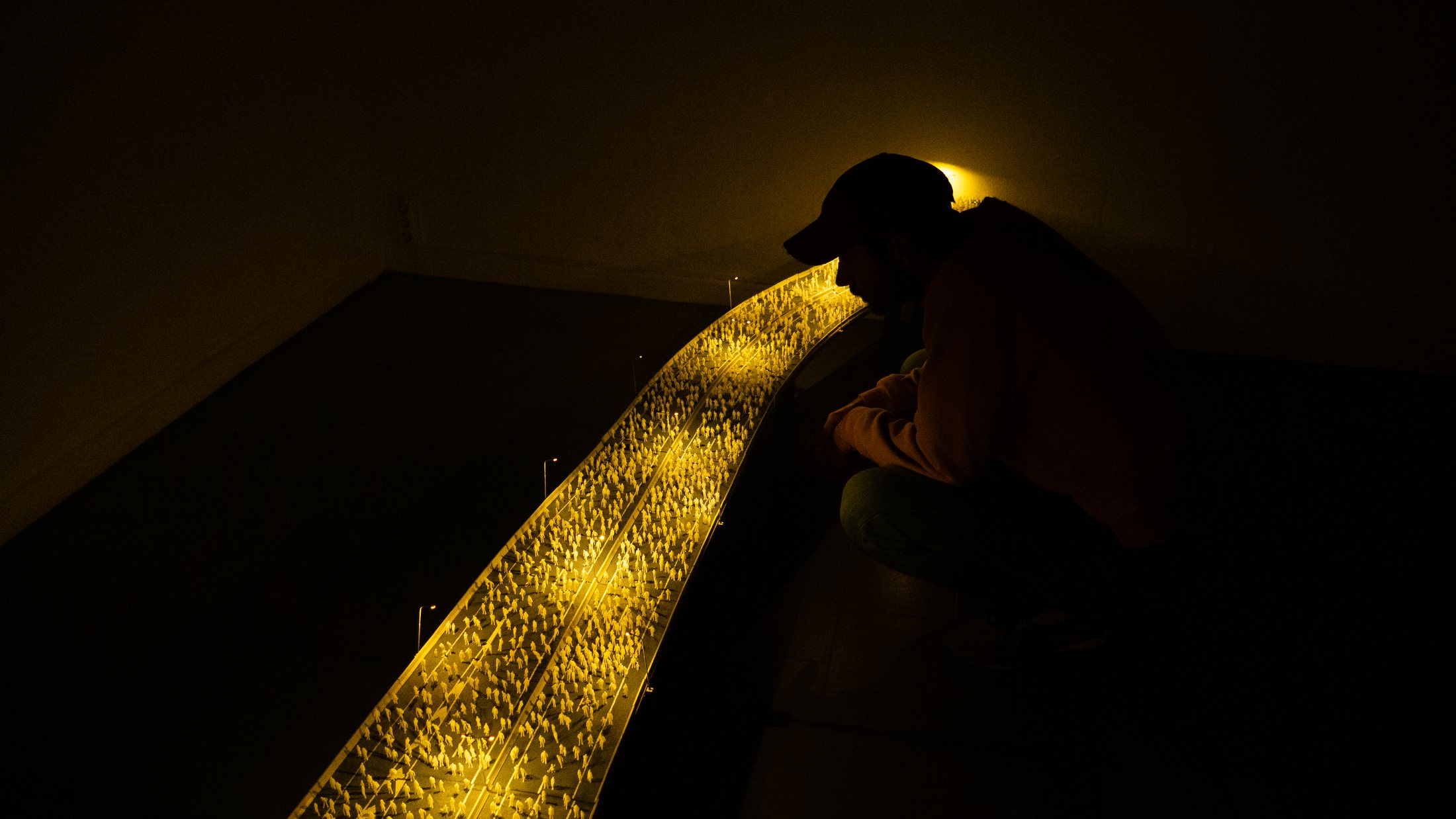
2025 , Expanded polyethylene, MDF, fir wood, UV resin 3D prints, plastic figures, LED installation (398 × 94 × 45 cm)
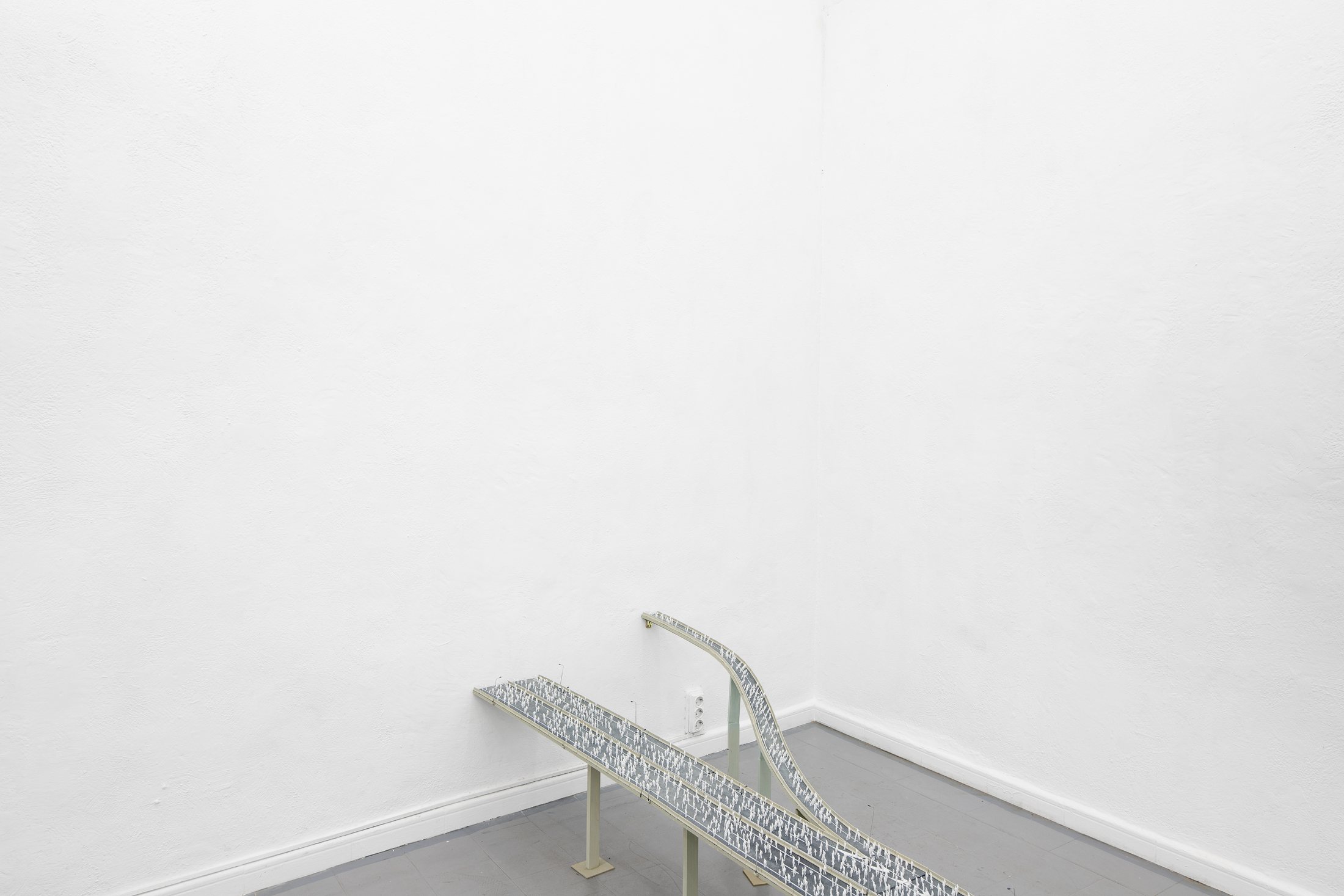
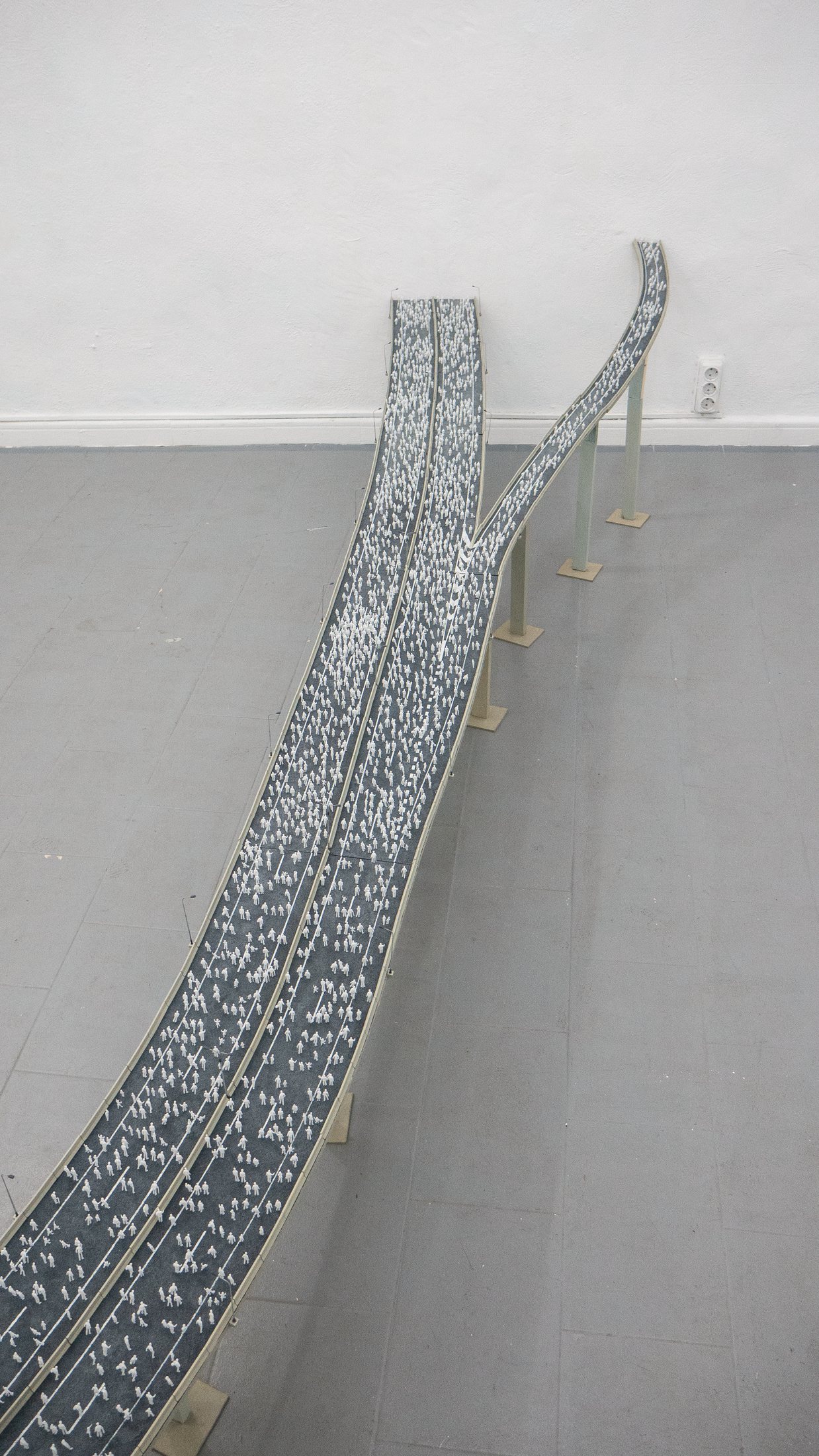
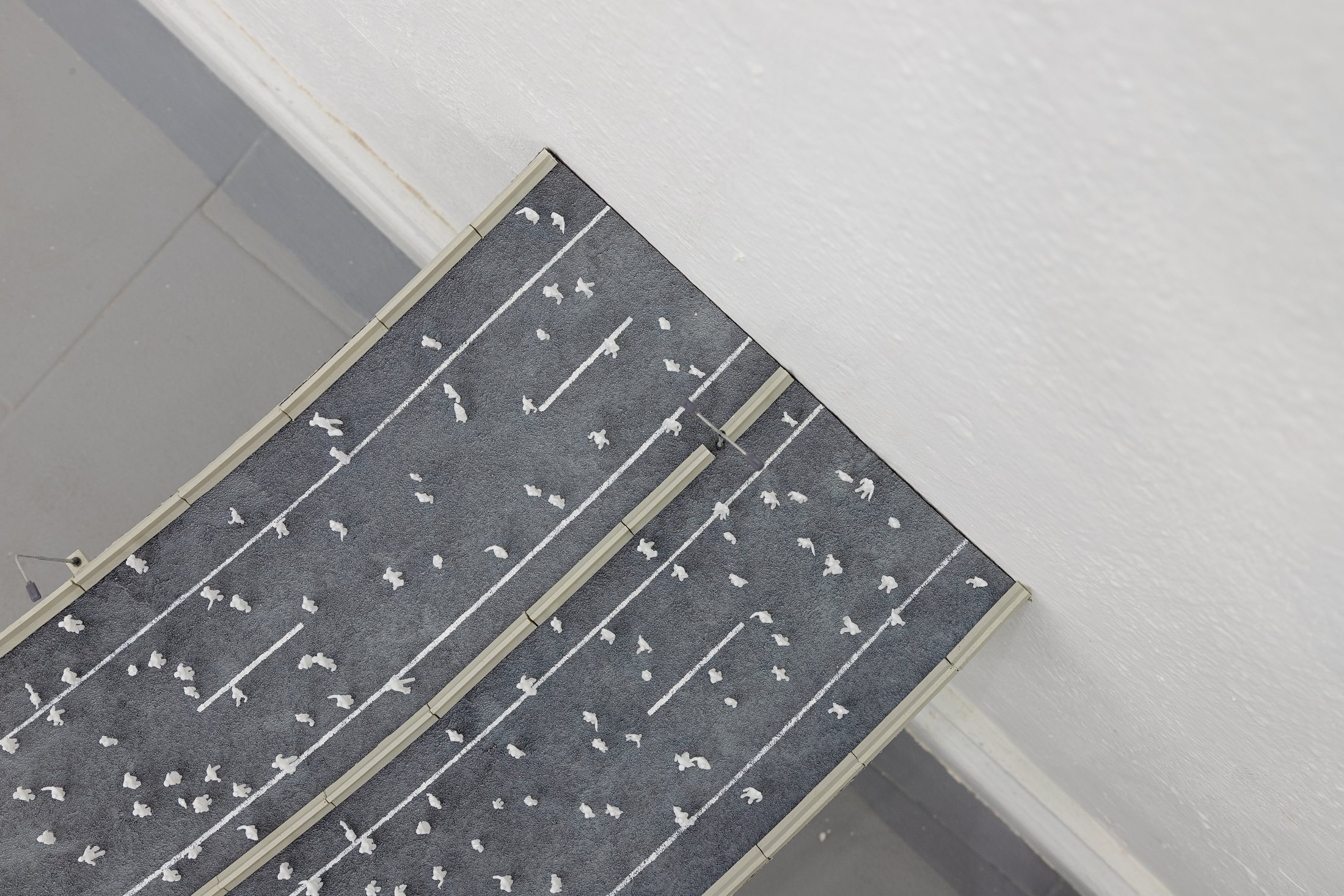
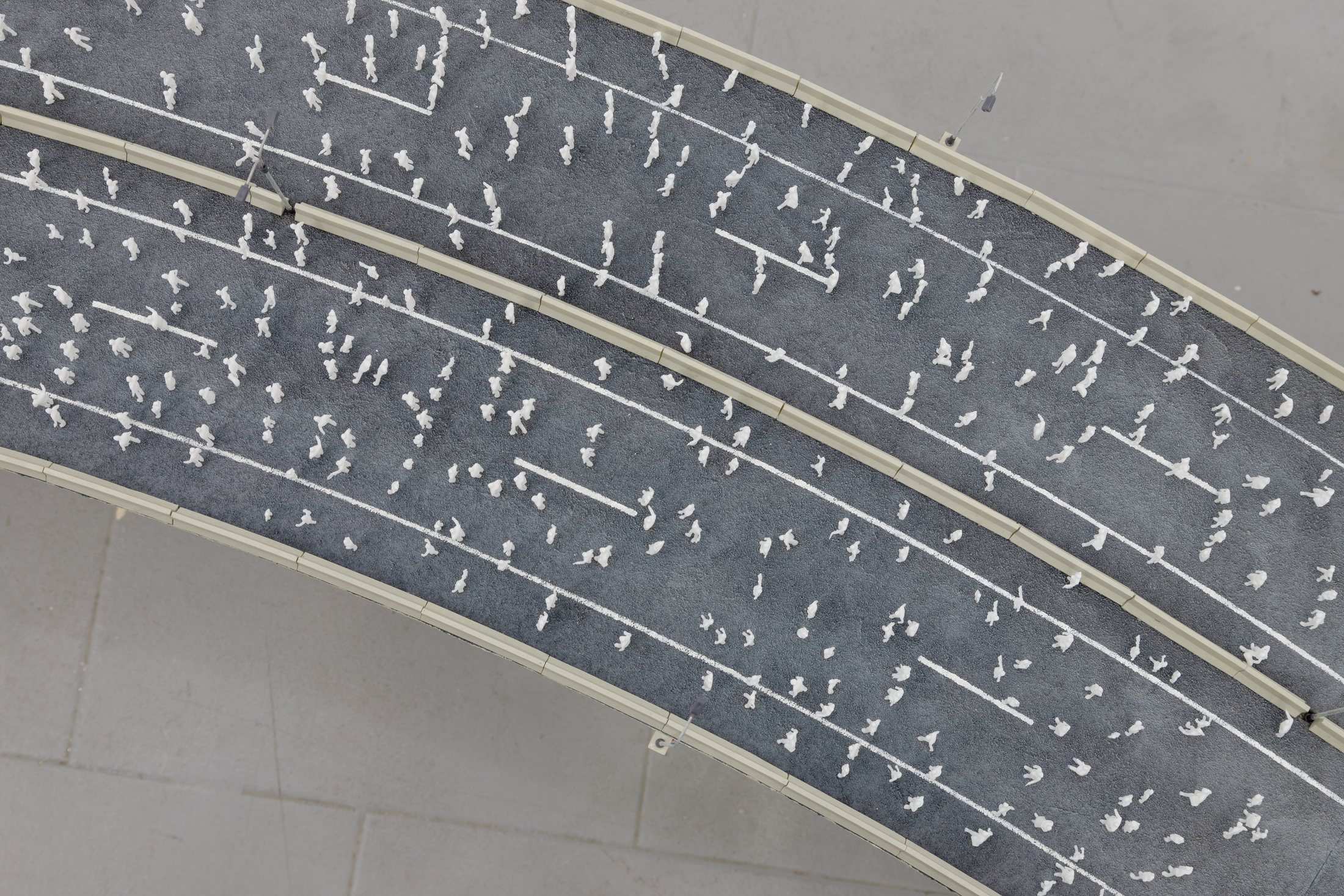
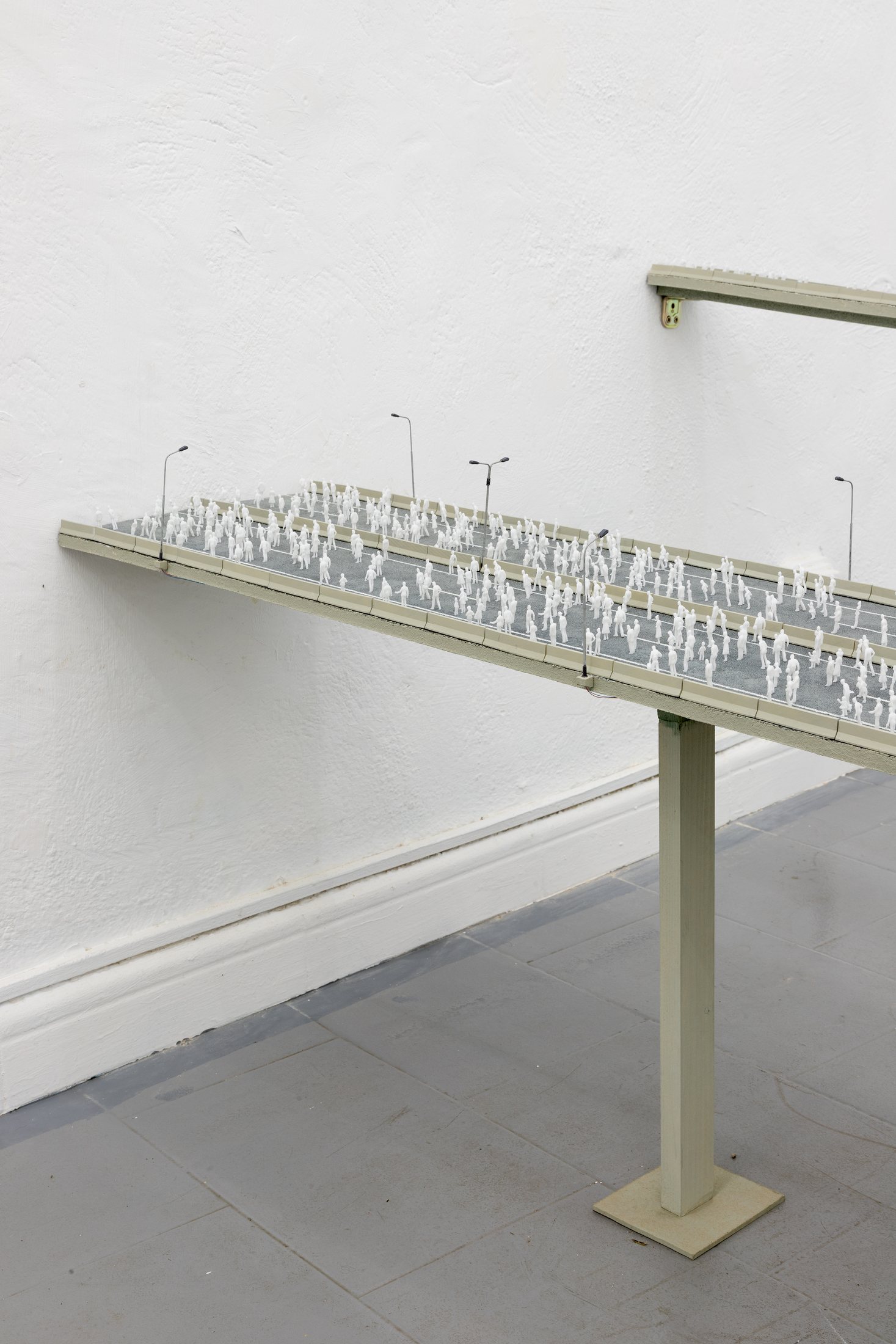
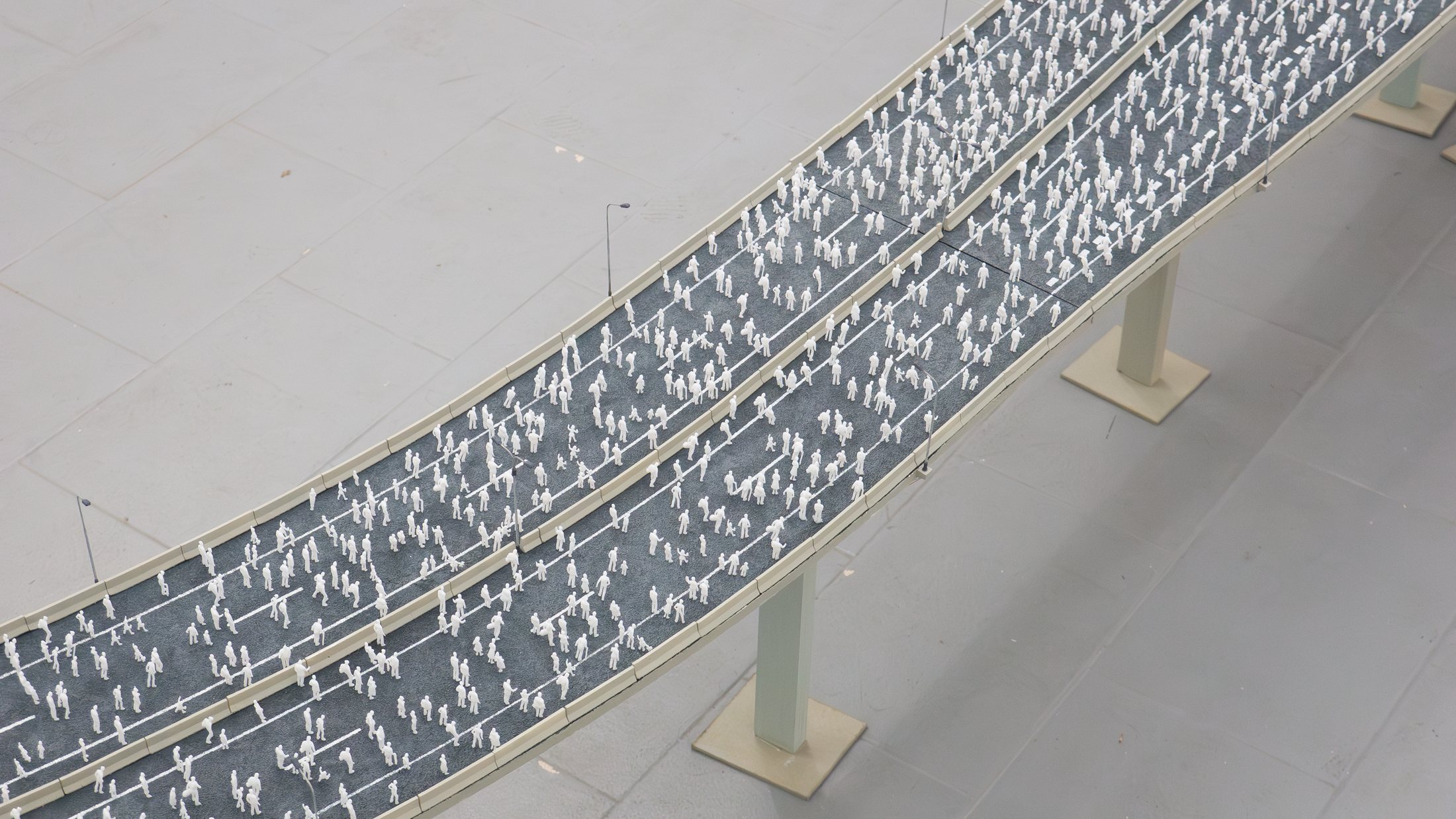
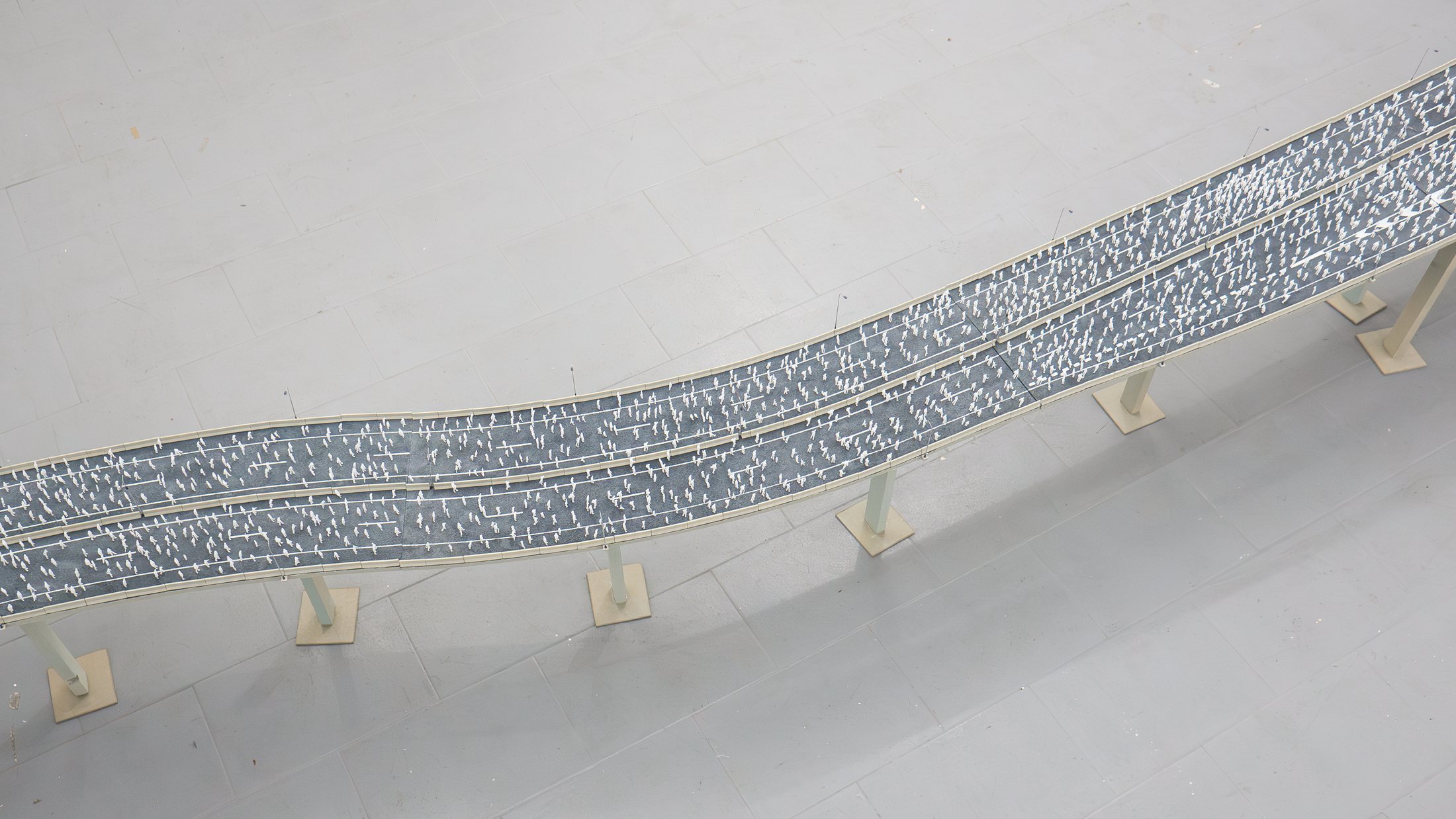
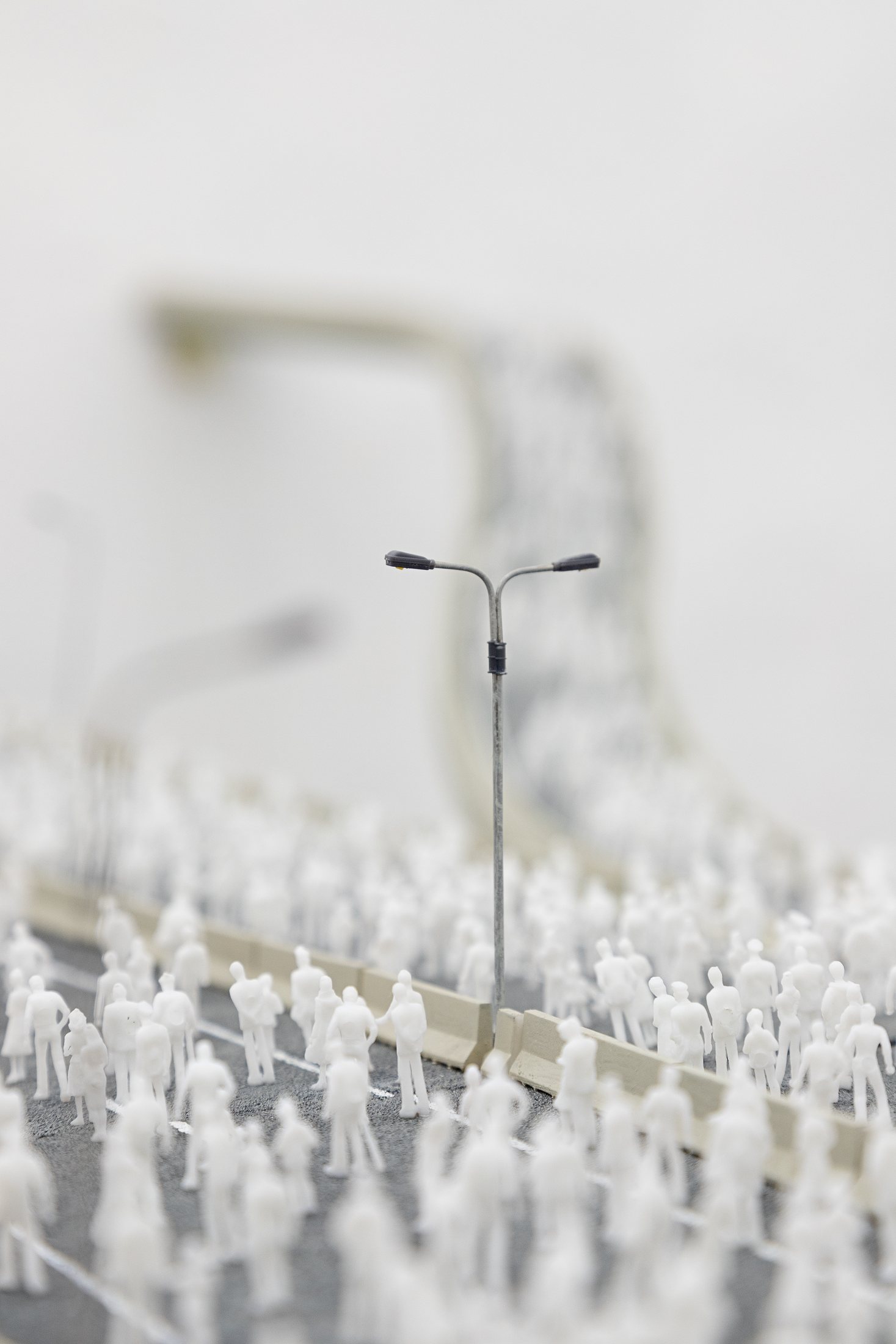
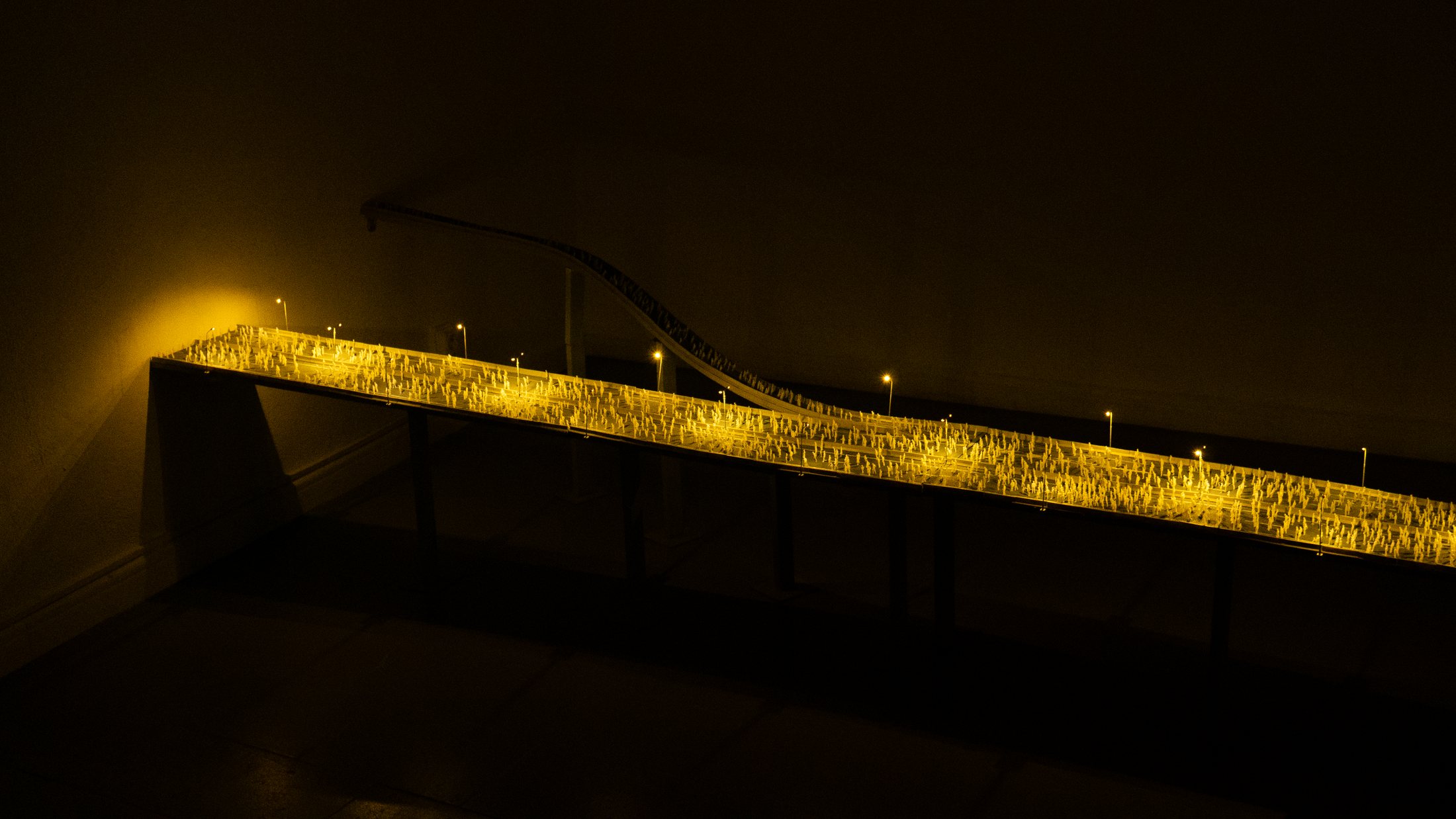
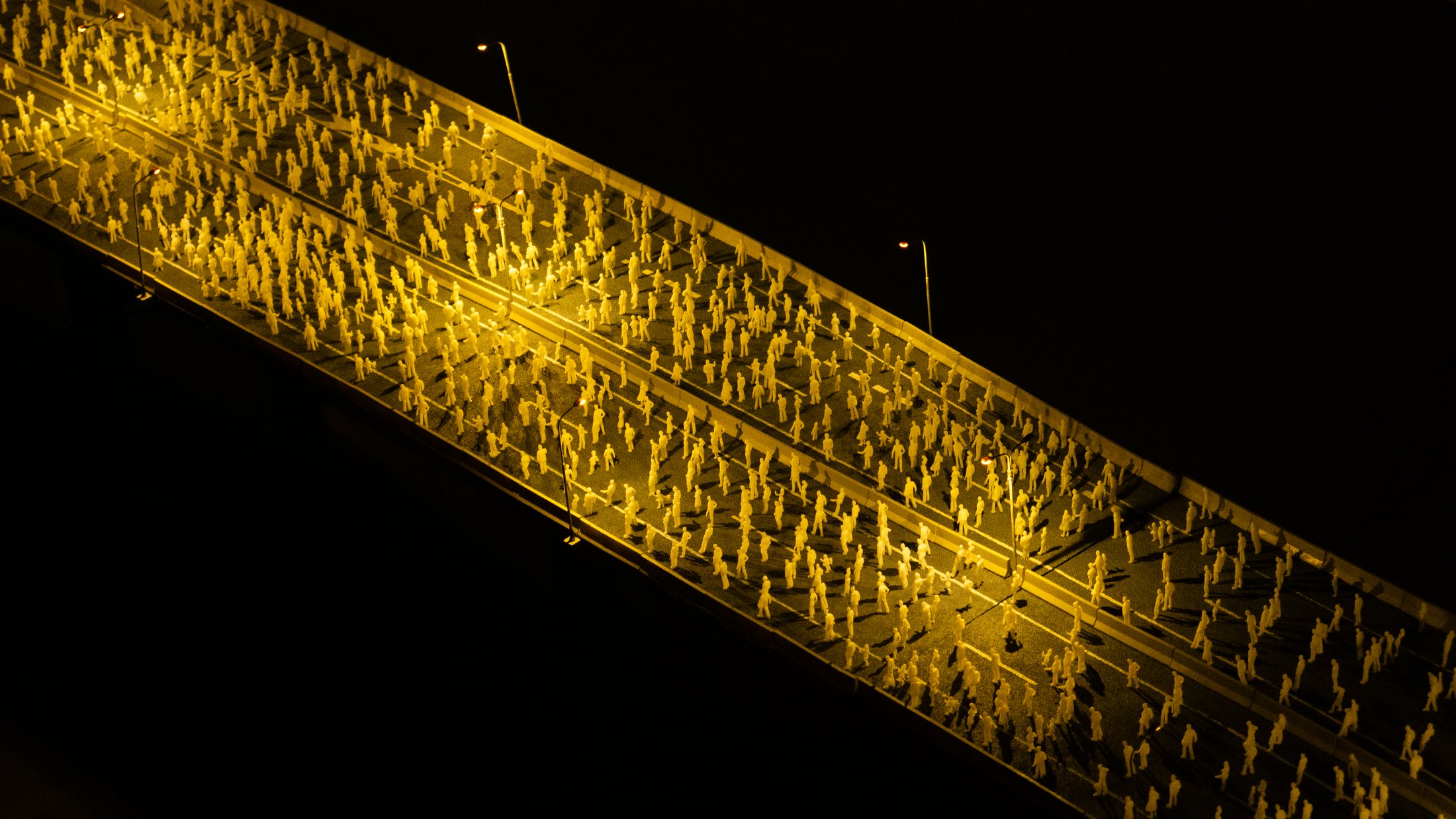
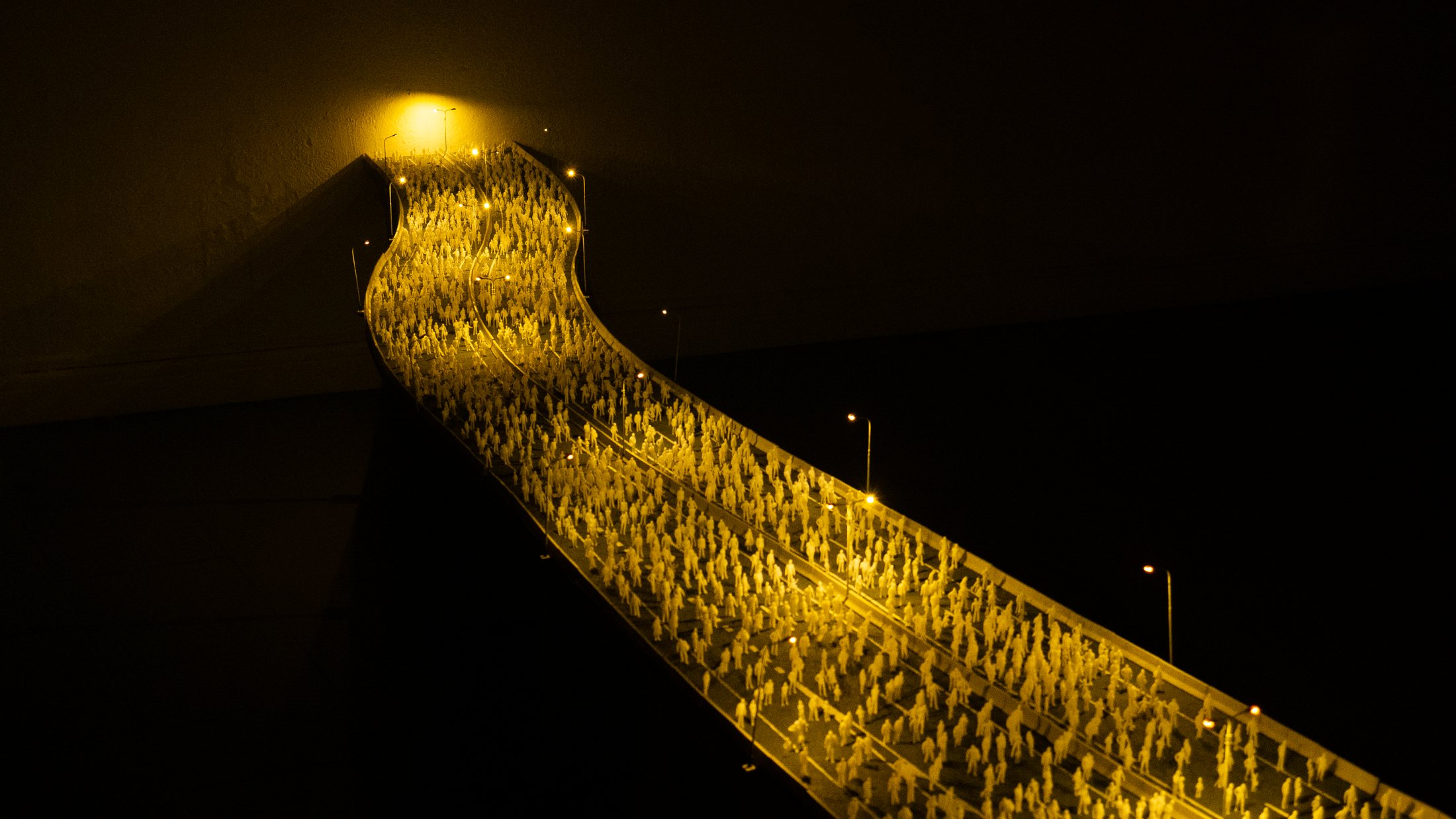
A 1:100 scale model of a stretch of motorway cuts violently across the room, from wall to wall. Thousands of people travel along it: mass-produced, poor-quality white plastic figures occupy a space usually reserved for cars and speed.
The scene is massive and overwhelming: something resembling an event is taking place, challenging the idea of the end of history, although it is not clear what it is. It could be a large-scale social mobilisation, a diaspora, an escape from catastrophe, or the return home of displaced Palestinians. It could be a universal refusal of the widespread crises of the system, a spiritual procession, or a metaphysical passage from one state to another. It could be something we cannot yet conceive as possible.
Walter Benjamin explained that, during the French Revolution of 1830, the revolutionaries brought about a turning point in the continuum of history: they stopped time. At the same time, in various streets of Paris, they fired at the clocks that stood in their way. These clocks evoked the fact that the times were absolutist, and that this order inevitably had to be overthrown to make way for a new era.
Algo casi inconcebible —Sergio Monje’s (Palma, 1994) site-specific exhibition at TACA— is precisely about this: inscribing a crack in contemporary reality. Somewhere between expanded sculpture and architectural model, with a direct influence from realist dioramas—scenes that seek to capture a specific story through hyperrealism—the artist presents a multifaceted work: the fiction of an urban landscape with countless layers of meaning.
The motorway bursts into the white cube, crossing it from left to right; as viewers move through the space, they immerse themselves in an atmosphere of asphalt, petrol and burnt oil. Other elements remind us that we are looking at an urban stage set: continuous and broken traffic lines, hard shoulders, concrete barriers and slip roads. Yet this infrastructure is unlike any other: it is occupied by a uniform mass of anthropomorphic figures which, arranged strategically and with great precision, move illegally through a space intended for cars and speed. White and made of plastic, they have no identifying features and advance persistently in the same direction, without looking back, as if in a procession of souls, a pilgrimage or an almost alien displacement.
With echoes of the Italian Futurists, the motorway becomes the form of modernity: aesthetic and allegorical, disturbing and unsettling. A non-human architecture that functions as a liminal, transitional space, embodying invisible rules and standardised experiences, while revealing how globalisation and latent capitalism have destroyed distance. What are these people doing here? Who are they, and where are they going? Are they really silent, like a procession, or do their demands contaminate the deafening noise of the motorways? Their motivations are always diverse and may stem from fear, flight and exile, but also from return and rebellion. The scene is trapped in the history of the present, demanding an immediate response to contemporary malaise.
Perhaps they are climate refugees who have experienced ecological collapse. Perhaps they are residents on their way to occupy the airport. Or perhaps they are displaced Palestinians crossing the Netzarim Corridor to return to their homes, destroyed and reduced to rubble after the ceasefire. Perhaps this is a response to the far right or, as Hito Steyerl might put it, to the disruptive technologies that have violently shaken societies and human relationships. Perhaps, in the manner of Martí Peran, it represents the general malaise of a society that medicalises itself in order to keep producing, and sees fatigue as the beginning of a strike. Or perhaps they are simply the forces of realism. In any case, a force capable of mobilising these figures, turning the motorway into a public space and transforming potentiality into political action.
Algo casi inconcebible is artist Sergio Monje’s invitation to think critically about how we can and how we want to inhabit contemporary life collectively. Can “a social and psychic revolution of almost inconceivable magnitude” really take place? Is this the end of history, or the beginning of a new politics to come?
Curatorial text by Clàudia Desile, TACA, 2025.